


Mingde Machinery: a Professional Bread Crumb Production Line Manufacturer
We are based on good product quality and guided by integrity and credibility. We have a proven track record of quality and service.
First-class Manufacturing Technology
We create extrusion solutions that can be integrated with factory owners and enable them to develop custom products from scratch. Our extrusion technology facilitates easy integration and maintenance at lower costs and forms a strong technical support system for customers.
Rich Market Experience
Our products have been exported to more than 80 countries including the United States, Poland, Canada, Mexico, and Brazil. Each of our members is professional and experienced and can serve our clients online or offline.
Variety of Products
We can provide customers with many types of production lines and equipment, such as snack food production lines, pet food production lines, food puffing machines, instant noodle production lines, artificial rice production lines, bread crumb production lines, popcorn production lines, biscuit production lines, etc.
Powerful Customization Capabilities
We have experienced managers, excellent engineers and well-trained technical workers. These personnel ensure that we can provide individual equipment or complete factory layouts and production lines to meet our customers' customized needs. We have completed many large-scale projects such as 2-ton pet food production line.

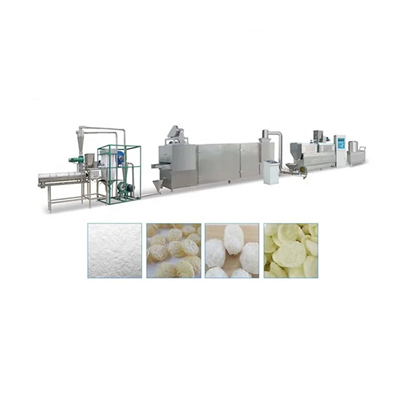


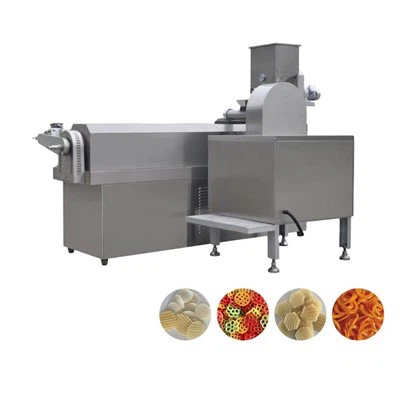


Product Categories
Latest Products


Brief Introduction to Food Extruder Machines
Food extruder machines have a very long history, with meat extruders being used to make sausages as early as the 1870s. Since then, food extrusion technology has found its way into everyday kitchen appliances, such as herb and coffee grinders, meat grinders, and pasta machines. These devices enable consistent quality, uniformity and efficient output when mass-producing edible products. Raw materials can be processed into cooked or cold-formed consumer products in a variety of sizes, colors, shapes and textures. Foods that are high in starch can be extruded well, such as pasta, bread, cereals, snacks and candies. Food extruders use the heat generated by the friction of the process, as well as any additional cooking heat provided, to evenly mix the ingredients before passing the material through a mold to form the final product.
How Does Food Extruder Machines Work?
On the surface, the principles of operation of the food extrusion are similar in all types. First, the raw materials are fed into the extruder barrel and the screw(s) then convey the food to it. Further down the barrel, there are smaller flights that will restrict the volume and increase the resistance to movement of the food. As a result, the barrel gets filled and the spaces between the screw flights and becomes compressed. As it moves further along the barrel, the screw will knead the material into a semi-solid, plasticized mass. The hot extrusion process involves heating above 100ºC. In this case, the frictional heat and other additional heating process make the temperature to rise rapidly.Also, the smaller flight section of the barrel increases the pressure and shearing. Finally, the entire content is forced through one or more restricted openings (dies) at the discharge end of the barrel. When the food emerges under pressure from the die, it expands to the final shape and then cools rapidlyby flashing off moisture as steam. Here, a variety of shapes, rods, spheres, doughnuts, tubes, strips or shells can be formed.

Features of Food Extruder Machines
- The food extruder can be equipped with a variety of feeding methods and feeding units, which can realize the measurement and quantitative addition of various materials.
- Food extruders are usually equipped with an automatic circulation cooling system to accurately control the temperature.
- The food extruder has compact structure and high production efficiency. Not only do they have smooth transmission and low noise, they are also easy to operate and maintain.
- The screw design has a strong self-cleaning function, so when changing formulas and product varieties, users almost do not need to stop the machine for cleaning.
- The screw has a strong pumping effect and has a strong stagnation and diffusion effect on the material. Therefore, these extruders are fast while ensuring consistent product quality.
- The cutting system can be easily adjusted, and the gap between the cutting knife and the template can be easily adjusted. Food extruder manufacturers can prepare different templates according to user needs to ensure that food of different specifications and shapes can be produced.
- Some models have wet and dry functionality.
Advantages of Food Extruder Machines
Food extruders are extremely versatile machines that can be used in a variety of industries. They produce products such as confectionery, savory snacks, and other small food items. There are several advantages to using snack food extruders in your business.
One of the main advantages of using a food extruder is that it delivers consistent quality. The snack food extruder can quickly and easily complete the molding work of snacks without having to manually shape them with your hands. Plus, since the manufacturing process of these machines is often very precise, you can be sure that the quality of your snacks will be consistent from batch to batch.
One advantage is that food extruders are fast and efficient. They can quickly produce high-quality products on a large scale. This means that you can quickly produce new products and variants without having to worry about manufacturing delays or costs. By automating certain aspects of the manufacturing process, you can free up your employees to focus on more important tasks. Plus, because snacks are often one of the most popular items on a restaurant menu, using a snack food extruder machine can give your restaurant an edge over its competition.
Another advantage of snack food extruders is that they are versatile. You can use them to produce a variety of different types of snacks, including those with unique flavors or textures. This means that you can create products that appeal to a wide range of consumers. They are used to create various types of snack foods, such as potato chips, breaded chicken nuggets, and macaroni and cheese bites. These machines typically use a series of heated die plates to shape the snack food into specific shapes, such as bars or chips.
Food extruders can be used to create custom formulations. This means that you can customize the recipes used in the machines to ensure maximum efficiency and accuracy. This allows you to create products that are specifically tailored to your needs and preferences. Food extrusion machines can also help your business manage its production more effectively.
Food Extruder Machines Specifications
|
Model |
MD-65 |
MD-70 |
MD-85 |
MD-100 |
|
Voltage customized |
380v/50Hz |
380v/50Hz |
380v/50Hz |
380v/50Hz |
|
Installed power |
22kw |
45kw |
55kw |
110kw |
|
Capacity |
120-150kg/h |
200-300kg/h |
400-800kg/h |
1000-2000kg/h |
|
Length |
26m |
28m |
45m |
45m |
Two Extrusion Technologies in Food Extruder Machines
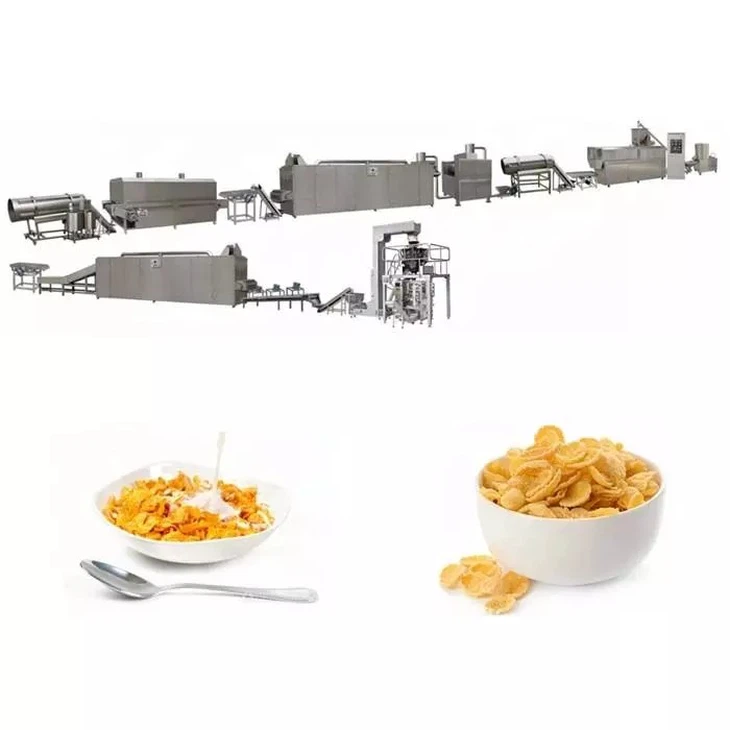
There are two types of extrusion processes
Cold Extrusion
The main application of cold extruders is in pasta production, although similar machines are used to form biscuit dough into different shapes. A pasta extruder is used to make many different types of pasta using dough made from durum wheat flour (or ‘semolina’) and eggs (optional). Coloured pasta can also be made by adding tomato purée or spinach paste etc. Different sizes of equipment are available, from small manual machines that are used in micro-scale production and food service outlets, to larger electric machines. The equipment has a mixing chamber, extruder barrel and a die for the desired pasta shape. There is debate over the best material for dies, with some equipment manufacturers using stainless steel or plastic, and others preferring bronze dies, which they claim imparts a rough surface to the pasta that holds sauce better than pasta made by other methods. Shapes are cut to the appropriate length as they emerge from the die, except rigatoni, which is extruded in long lengths and then cut to the correct size (straight for rigatoni or angled for penne rigati). Pasta is cooked immediately in food service outlets, or dried by processors for retail sale. It can also be frozen for up to six months.
Hot Extrusion
Extruders may be single- or twin- screw machines. Twin-screw machines have approximately twice the capital and maintenance costs of single screw machines and are unlikely to be affordable by most small -scale processors as compared to single- screw extruders. The two factors that control the type and quality of foods that are produced by hot extrusion are the operating conditions in the extruder barrel and the mixture of ingredients that is used.

Applications of Food Extruder Machines
Food extruders are used in the food processing industry to produce extruded food and pet feed for human consumption and to add value to food waste and by-products. Extrusion is a cost-effective method of reintroducing food processing by-products and residues into the food supply.
Food extruders are used to produce snacks, breakfast cereals, meat and cheese analogues, complementary foods, baby feeds and various textured foods. Extrusion cooking is a method of producing chewy gelatinized products, such as chewing gum and licorice, from a combination of sugar, glucose and starch. The heat gelatinizes the starch, dissolves the sugar, and evaporates any remaining water before it is drained from the machine.
Food extruders offer great flexibility in developing low-cost, highly nutritious and convenient food products. Extruded foods have the potential to replace traditional snack foods that are low in nutrition. Extrusion technology increases the nutritional content of the product while reducing anti-nutrients such as phytic acid and tannins and improving protein digestibility and antioxidant activity.
Key Factors to Consider When Choosing a Food Extruder Machine
When selecting a food extrusion machine, there are several factors to consider. These machines are needed to make food products like pasta, snacks, pet food, and more. Here are some key factors to keep in mind when choosing the right food extrusion machine for your business:
Type of Extruder
For food processing, you should determine if you require a single-screw extruder or a twin-screw extruder. Many experts consider the latter is the preferable option as it uses less energy and is easy to manage and sanitize. Furthermore, a twin-screw extruder offers improved exhaust qualities as well as a simple material loading option. In addition, compared to single-screw extruders, twin-screw extruders offer better flexibility, control, and productivity in feed and food processing. A single-screw extruder, on the other hand, provides reliable and high-speed extrusion, and effectively transports and mixes the material.
Capacity
The capacity of the extruder is an essential factor to consider. It's essential to choose a machine that can handle the volume of the product you need to produce.
Product Types
Another important thing to think about is what kind of product you want to make. Different products require different extrusion machines. For instance, if you are planning to make pasta, you need a machine that can handle the dough and shape it. Similarly, if you are producing snacks, you need a machine that can handle a range of ingredients and textures.
Quality
The quality of the extruder is critical as it can affect the quality of your product. Look for a machine that can provide consistent and uniform output. The extruder should also be durable and easy to maintain.
Cost
It's important to think about how much the extruder will cost, especially if you run a small business. However, it's essential to balance cost with quality and capacity.
After-sales Support
The extrusion machine's after-sales support is also important. Look for a manufacturer that will help you learn how to use and take care of the machine properly.
Safety
The safety of the extruder is another critical factor to consider. Ensure the machine meets safety regulations and has safety features to prevent accidents.
Familiarize Yourself With The Equipment
Understand the operating instructions, safety features, and emergency shut-off procedures specific to the food extruder you are using. Follow the manufacturer's guidelines and attend any necessary training sessions.
Personal Protective Equipment (PPE)
Wear appropriate PPE, such as safety goggles, gloves, and protective clothing, to prevent injuries from flying debris, hot surfaces, or contact with chemicals.
Keep the Work Area Clean and Organized
Maintain a clutter-free work environment to reduce the risk of accidents. Remove any obstructions or trip hazards from the area around the food extruder.
Temperature and Pressure Management
Be aware of the temperature and pressure settings of the extruder. Follow the recommended guidelines to prevent overheating, explosions, or other safety hazards.
Monitor Material Feed
Ensure that the material being fed into the extruder is suitable for the machine's specifications. Avoid overloading the extruder, as it can lead to mechanical failures or safety risks.
Follow Lockout/Tagout Procedures
Before performing maintenance or cleaning tasks, ensure the food extruder is powered off and properly locked out or tagged out to prevent accidental startup or release of stored energy.
Prevent Access To Moving Parts
Never reach into or near the extruder while it is in operation. Wait for it to come to a complete stop before performing any adjustments, maintenance, or cleaning.
Regular Maintenance And Inspections
Conduct routine inspections of the extruder to identify any signs of wear, damage, or malfunction. Keep the equipment properly maintained and address any issues promptly.
Emergency Preparedness
Familiarize yourself with emergency procedures, including the location of emergency exits, fire extinguishers, and first aid kits. Know how to respond to potential emergencies, such as fires, power outages, or equipment malfunctions.
Our Packaging
We will pack your machine as follows

Our Factory
This is a photo of our factory


Ultimate Guide
Q: What are the factors affecting food extrusion?
Q: How does a food extruder work?
Q: How does extrusion affect food quality?
Q: Why is food extrusion important?
Q: What are the uses of extruder in food industry?
Q: What is an example of extrusion in food processing?
Q: What are the applications of food extrusion?
Q: What is the history of food extruder?
Q: What is food extrusion?
Q: What are the parts of a food extruder?
Q: What happens if extruder is too hot?
Q: What foods can be extruded?
Q: What kind of extruder is commonly used in food processing?
Q: What are the properties of extruded food products?
Q: How are extruders heated?
Q: What is a snack food extruder?
Q: How to choose snack food extruder?
Q: How does a food extruder save time and money?
Q: How to extend the service life of food extruder?
Q: How to tell if the screws of a food extruder are worn?
As one of the leading food extruder machine manufacturers and suppliers in China, we warmly welcome you to buy durable food extruder machine at competitive price from our factory. Good service and quality products are available.
