


Mingde Machinery: a Professional Artificial Rice Production Line Manufacturer
We are based on good product quality and guided by integrity and credibility. We have a proven track record of quality and service.
First-class Manufacturing Technology
We create extrusion solutions that can be integrated with factory owners and enable them to develop custom products from scratch. Our extrusion technology facilitates easy integration and maintenance at lower costs and forms a strong technical support system for customers.
Rich Market Experience
Our products have been exported to more than 80 countries including the United States, Poland, Canada, Mexico, and Brazil. Each of our members is professional and experienced and can serve our clients online or offline.
Variety of Products
We can provide customers with many types of production lines and equipment, such as snack food production lines, pet food production lines, food puffing machines, instant noodle production lines, artificial rice production lines, bread crumb production lines, popcorn production lines, biscuit production lines, etc.
Powerful Customization Capabilities
We have experienced managers, excellent engineers and well-trained technical workers. These personnel ensure that we can provide individual equipment or complete factory layouts and production lines to meet our customers' customized needs. We have completed many large-scale projects such as 2-ton pet food production line.


Product Categories
Latest Products


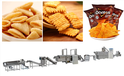


The artificial rice production line is an advanced piece of equipment that combines engineering precision with cutting-edge food processing methods. Its biggest feature is that it adds a variety of nutrients needed by the human body to rice to produce a variety of health foods, functional foods, and functional foods. This equipment mixes the ingredients, extrudes the mixture into a rice-like shape, and then dries and packages the finished product. Artificial rice production lines are easy to use, so manufacturers can make full use of them to run their business. It can significantly improve your factory's productivity and product quality.
Features of Artificial Rice Production Lines
Various Configurations
The artificial rice production line consists of a feeding system, an extrusion system, a rotary cutting machine, a heating system, a transmission system, a control cabinet, etc. The machine also has a vibrating screen that separates the grains from the husks. Afterwards, it is transferred to a multi-layer oven to dry the product and extend its shelf life.
Enhance Effectiveness
Planting, harvesting, and milling are only a few of the many agricultural procedures used in traditional rice farming. The Artificial Rice Making Machine, on the other hand, simplifies the production process, requiring less time and resources. The machine’s automatic features guarantee consistency in quality and do away with the necessity for labour-intensive manual work.
Improve Nutritional Value
Producing rice artificially allows for the manufacturing process to include the addition of vital nutrients to the grains. The Artificial Rice Making Machine provides a chance to fight hunger and boost public health by enhancing the rice-like grains with vitamins, minerals, and other bioactive substances. This function can help treat vitamin shortages, making it especially helpful in areas where rice is a primary meal.
Flexibility and Customization
Artificial Rice Production Line offers flexibility and customization in contrast to real rice, which is restricted to specific types and necessitates particular growth environments. Manufacturers can experiment with various tastes and ingredients to satisfy a wide range of consumer preferences. The machine can also generate grains that resemble rice in a variety of sizes and forms, opening up new culinary possibilities.
Benefits of Artificial Rice Production Lines
The machine gives the producer more control over the nutritional makeup of the finished product by supplementing the rice with necessary nutrients. In order to counteract malnutrition and nutritional inadequacies, fortified rice types can be produced. These kinds of rice are loaded with vitamins, minerals, and other dietary components.

01
Improve Meal Security
By creating a high-quality and inexpensive staple meal, the artificial rice making machine has the ability to address issues with food security. Its production method is simple to scale up to meet the demand of both domestic and international markets, assuring a consistent supply of grains that resemble rice.
02
Cost-Effective Approach
The device provides a budget-friendly response to the expanding demand for rice. Artificial rice production uses less area, less work, and less water than conventional rice growing. It can be grown in places where rice farming would not be practical, which lowers production costs and improves accessibility.
03
Sustainability and Waste Reduction
By lowering the post-harvest losses linked to conventional rice farming, the machine helps to promote sustainable food production. By turning broken rice grains into useful food items, it reduces the amount of waste of these grains, which are frequently thrown away during milling procedures.
04
Various Applications
Artificial rice production line’s adaptability enables customization depending on consumer preferences and geographical inclinations. It can generate several kinds of artificial rice, including brown rice, wild rice, and rice with flavours, to accommodate various culinary customs and preferences throughout the world.
Artificial Rice Production Lines Specifications
|
Model |
MD-65 |
MD-70 |
MD-85 |
MD-100 |
|
Voltage customized |
380v/50Hz |
380v/50Hz |
380v/50Hz |
380v/50Hz |
|
Installed power |
22kw |
45kw |
55kw |
110kw |
|
Capacity |
120-150kg/h |
200-300kg/h |
400-800kg/h |
1000-2000kg/h |
|
Length |
26m |
28m |
45m |
45m |
Basic Production Process of Artificial Rice Production Lines
Crushing System: Crushing is the process of crushing large materials into smaller particles or powders, which can reduce the particle size and increase the specific surface area. Fine powder improves dispersion and makes the mixture uniform.
Fully Automatic Raw Material Preparation and Feeding System: This system is usually controlled by a microcomputer, which can achieve accurate weighing and reduce errors caused by manual intervention.
Extrusion System: The extruder can realize one-click start, host real-time data storage, real-time monitoring, and alarm reminder functions. The twin-screw extruder uses 3D software design, computer simulation and automatic testing to ensure that it meets the requirements.
Vibration Drying System: It does little damage to the material surface and can be used to dry fragile materials. This system allows for even drying and excellent adjustability. It usually adopts a fully enclosed structure to effectively prevent cross-infection between materials and air to ensure hygiene. Under the action of vibration force, the material is thrown up in the horizontal direction and moves forward continuously. After the hot air exchanges heat with the wet material through the fluidized bed, the dry material is discharged from the discharge port.
Continuous Belt Drying System: It uses an external air circulation system with high efficiency and low energy consumption. Baking time and temperature are adjustable. Low-temperature drying can better retain the nutrients of rice grains
Cooling System: The cooling system ensures efficient and fast cooling.
Packaging System: It is equipped with a fast packaging machine, which is efficient and stable.
Key Factors to Consider When Choosing a Artificial Rice Production Line
Certification
This is the easiest way to verify the artificial rice machine. The more certificates a manufacturer obtains, the higher the quality and superior performance of the artificial rice production line.
Material
The best material is stainless steel. The artificial rice maker made of stainless steel has a longer service life, is more wear-resistant, and is easy to clean.
Productivity
Nowadays, industrialization is very common, so efficiency is life. High production efficiency can help artificial rice manufacturers get more orders, thereby further expanding the market.
Production Scale
Determine expected production scale and capacity to meet market demand. This will affect the scale selection of artificial rice production lines.
Formula
Consider different artificial rice production techniques, such as methods based on starch, protein or other ingredients. Choose the technology that suits your product formulation and market needs.
Cost
Comprehensively consider the costs of production line equipment, labor, raw materials, etc. Develop detailed cost analysis to determine product pricing and production feasibility.
Regulations
Understand and comply with relevant regulations and quality standards to ensure that the artificial rice produced meets national and regional food safety standards.
Degree of Automation
Consider the degree of automation in your artificial rice production line to increase production efficiency, reduce costs, and reduce the possibility of human error.
After-Sales Service and Technical Support
Choose a reliable artificial rice production line supplier. They can provide good after-sales service and technical support to ensure the stable operation of the production line and timely resolution of problems.
Guide to Hygiene in Artificial Rice Production Line
Artificial rice production lines and machinery must be designed to allow easy maintenance and thorough cleaning of all equipment. Designing machinery specifically to ensure the risk of cross-contamination is minimized and maintenance efficiency is maximized is the most effective way to keep machinery and equipment safe. All parts of the production line should be deep cleaned regularly using food-safe antimicrobial disinfectants. In addition, the safety of the equipment itself should be checked regularly to ensure there are no loose parts that could contaminate food with foreign matter. Metal, rubber and plastic parts may be loose and should be inspected carefully. Using the correct cleaning and sanitation equipment in food production ensures equipment is cleaned to the highest standards and can significantly reduce the risk of contamination within the facility. Using a dedicated cleaning machine ensures your equipment is cleaned the right way, prevents damage, and saves a lot of time over manual cleaning processes.
The personal hygiene of rice production line workers and other employees involved in commercial food production is directly related to the safety of the organization. Workers are on the front lines of food production, so this is probably one of the most important points to pay attention to. Regular hand washing and disinfection are necessary. Employees should ensure they clean their hands thoroughly but wear gloves where possible to minimize skin contact with raw food. Personal protective equipment should be used when necessary. Hair should be covered with netting, and any wounds or sores should be completely covered. Staff should ensure they do not sneeze or cough around food at any stage of production and should not wear jewelry while working as it could fall into food. Foreign objects can pose a choking hazard to consumers.
Waste must be disposed of safely away from food production areas and must not accumulate. The accumulation of waste not only breeds bacteria, but also attracts rodents and other pests, jeopardizing food safety. Following strict waste management procedures can prevent contamination of ingredients and production equipment. Specific areas should be designated for waste storage and disposal.
Perishable raw materials should be clearly labeled and inspected regularly. Additionally, any hazardous cleaning or pest control chemicals should be stored away from food to prevent contamination risks from hazardous chemicals. Freezers and refrigeration units should be kept in good working order so that food can be satisfactorily preserved. It is also good manufacturing practice for employers to follow standard operating procedures to check for the presence of foreign matter in food products at the raw material stage and after production.
Our Packaging
We will pack your machine as follows

Our Factory
This is a photo of our factory


Frequently Asked Questions
Q: What are the advantages of artificial rice?
Q: How is artificial rice made?
Q: What does the artificial rice making machine do?
Q: What is artificial rice?
Q: What technology is used in the artificial rice production line?
Q: What are the raw materials of artificial rice?
Q: How to judge the quality of artificial rice?
Q: What is artificial rice production?
Q: What is the hot extrusion process of the artificial rice production line?
Q: Does artificial rice have health benefits?
Q: How to make brown rice from paddy?
Q: What does fortified rice mean?
Q: What is the difference between normal rice and fortified rice?
Q: How is extruded rice made?
Q: How do you make artificial rice?
As one of the leading artificial rice production line manufacturers and suppliers in China, we warmly welcome you to buy durable artificial rice production line at competitive price from our factory. Good service and quality products are available.
Artificial Instant Rice Production Line, Nutrition Rice Making Machine, Instant Rice Production Line