


company advantage
First-class Manufacturing Technology
We create extrusion solutions that can be integrated with factory owners and enable them to develop custom products from scratch. Our extrusion technology facilitates easy integration and maintenance at lower costs and forms a strong technical support system for customers.
Rich Market Experience
Our products have been exported to more than 80 countries including the United States, Poland, Canada, Mexico, and Brazil. Each of our members is professional and experienced and can serve our clients online or offline.
Variety of Products
We can provide customers with many types of production lines and equipment, such as snack food production lines, pet food production lines, food puffing machines, instant noodle production lines, artificial rice production lines, bread crumb production lines, popcorn production lines, biscuit production lines, etc.
Powerful Customization Capabilities
We have experienced managers, excellent engineers and well-trained technical workers. These personnel ensure that we can provide individual equipment or complete factory layouts and production lines to meet our customers' customized needs. We have completed many large-scale projects such as 2-ton pet food production line.
What is Pet Snack Food Machine
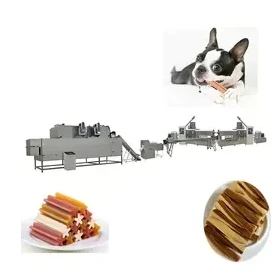
Pet Snack Food Machine refers to specialized equipment designed for the production of snacks intended for pets, such as dogs or cats. These machines automate the process of creating various types of pet treats, including dry kibble, extruded biscuits, chews, and other forms of edible pet products.Pet snack food machines are engineered to meet the specific dietary needs and preferences of pets, offering manufacturers the capability to produce high-quality, consistent, and palatable treats. They are designed with considerations for hygiene, ease of use, and efficiency to cater to both small-scale artisanal production and large-scale commercial manufacturing.



Product Categories
Latest Products



Benefits of Pet Snack Food Machine
Versatility
Many machines offer adjustable settings and interchangeable dies, enabling the production of a wide variety of treats. This versatility allows manufacturers to diversify their product lines and respond quickly to market trends.
Cost Savings
While the initial investment in a pet snack food machine may be substantial, the long-term savings on labor, waste reduction, and energy efficiency can justify the expense.
Efficiency
Pet snack food machines can significantly increase production output compared to manual processes. This allows businesses to scale up operations and meet higher demand with less labor and time per unit produced.Automated machinery ensures each batch of treats is uniform in size, shape, and texture, which is essential for maintaining brand quality and customer satisfaction.
Quality Control
Machines can be programmed to adhere strictly to quality control standards, ensuring each treat meets the required specifications and nutritional content.The ability to produce a wide range of high-quality, innovative pet treats can set a brand apart from its competitors, enhancing brand reputation and attracting a loyal customer base.
Hygiene and Safety
Automated machines are easier to clean and maintain than manual processes, reducing the risk of contamination and improving overall sanitation. This is critical for protecting the health of both pets and consumers.Advanced pet snack food machines can be customized to incorporate unique ingredients, flavors, and fortifications, allowing manufacturers to create specialty products that cater to specific pet dietary needs or preferences.
What are the Applications of Pet Snack Food Machine
Commercial Pet Food Manufacturing
Larger companies use these machines to mass-produce a wide array of pet treats. The scale of production allows them to distribute their products to retail stores, supermarkets, and online platforms.
Small Business Production
Boutique pet treat companies and local bakeries use pet snack food machines to create specialized, artisanal treats. These machines enable small-batch production with the flexibility to experiment with new recipes and flavors.
Private Label and Customization
Pet snack food machines allow for the creation of private label treats for pet stores, veterinary clinics, and grooming facilities. These personalized treats can be tailored to meet specific dietary requirements or preferences.
Research and Development
Animal nutritionists and researchers use these machines to develop new pet food products. The controlled environment of the machinery facilitates precise adjustments to create treats with specific nutritional compositions.
Agricultural Byproduct Utilization
Farms and agricultural businesses can use pet snack food machines to convert surplus crops or byproducts into pet treats, adding value to their operations and reducing waste.
Veterinary Nutritional Supplements
Veterinarians and pet wellness professionals might use these machines to produce snacks that double as nutritional supplements, aiding in the treatment or management of certain health conditions in pets.Organizations that train service animals or provide pet therapy may use pet snack food machines to produce healthy treats for rewards and motivation.
Types of Pet Snack Food Machine
Mixers are essential components used in pet food processing to mix ingredients like meat, grains, and vegetables. Mixers come in different types; horizontal, ribbon, and vertical. Horizontal mixers are best for large-scale pet food processing as they are used for high-volume mixing. Vertical mixers, on the other hand, are ideal for small-scale production because they can only mix ingredients in small quantities. Ribbon mixers are the most common pet food processing machines used in the pet food industry. They are more efficient and thorough in their operation compared to vertical and horizontal mixers.
To enhance pet foods' flavor, appearance, and texture, they are coated with a fine mist of liquids like oil. Mist coating machines are the machines used to apply these liquids in pet foods. Mist coating machines evenly distribute the mist and provide precise control over the amount of coating applied to the food.
Spray coating machines do the same work as mist coating machines but use a high-pressure spray to apply the coating to pet food. These machines are mostly used in the pet food industry because they are efficient and can also apply precise amounts of coating.
These pet food processing machines mix and shape the pet food into different shapes and sizes. Extruders work through a process that involves heating and cooling pet food ingredients. Later, the mixture is extruded through a die to form the shape desired. These machines are ideal for producing a wide range of pet food products like dry kibble and moist treats.
Track tracing machines monitor pet food production and ensure all steps are completed. This equipment uses a barcode system to track the pet food as it moves through the production line, ensuring it meets the required quality standards. Track tracing machines are fundamental in pet food production as they ensure the food is of the right quality and safe.
Components of Pet Snack Food Machine
Hopper:A storage container that holds the raw ingredients until they are ready to be processed.
Mixer: Used to combine the ingredients uniformly before cooking.
Extruder: Cooks the mixture under high pressure and pushes it through dies to form the desired shape.
Dies: Plates with specific shapes that the extruder forces the dough through to create various forms.
Cutting Device: Slices the extruded dough into predetermined lengths.
Oven: Bakes or dries the snacks to remove excess moisture.
Cooling Conveyor: Allows the snacks to cool down after baking or drying.
Coater: Adds flavors, oils, or other coatings to the snacks.
Seasoning Unit: Distributes flavorings or additives evenly over the snacks.
Conveyor Belts: Move the ingredients and finished products between processing stages.
Control Panel: Manages all operational settings such as temperature, speed, and time.
Safety Devices: Includes emergency stops and guards to protect operators.
Cleaning Systems: Assists in maintaining hygiene during production.
Packaging Machine: Not part of the main machine but often integrated or used alongside it to prepare the snacks for sale.
Pet Snack Food Machine Features
Hygienic Design
Components are typically made from food-grade stainless steel to prevent corrosion and make cleaning easier, adhering to sanitary standards.
Energy Efficiency
Modern machines are designed to minimize energy consumption, reducing operational costs and environmental impact.
Safety Features
Safety interlocks, emergency stop buttons, and protective guards are standard to ensure operator safety during machine operation.
Ease of Maintenance
Easy access to components and user-friendly cleaning procedures simplify maintenance tasks and extend the life of the machine.
Integrated Packaging
Some machines include packaging capabilities, allowing for seamless transition from production to packaging, further streamlining the process.
Scalability
The ability to adjust production volumes easily makes these machines suitable for small-batch production as well as large-scale commercial manufacturing.
Process Of Pet Snack Food Machine


Raw Material Handling
The first step in the pet food production process is the handling of raw materials. This includes the storage, transportation, and weighing of ingredients such as grains, meat, vegetables, and additives. A well-designed raw material handling system ensures that the right quantities of ingredients are available at the right time for processing.
Grinding and Mixing
After the raw materials are properly handled, they need to be ground and mixed to create a homogenous blend. Grinding reduces the size of ingredients, making them easier to process and improving their digestibility. Mixing ensures that all ingredients are evenly distributed throughout the blend, resulting in a consistent product.
Extrusion
Extrusion is a crucial step in the pet food production process. It involves subjecting the blended mixture to high temperature and pressure, forcing it through a die to create the desired shape and texture. This process not only cooks the ingredients but also imparts certain physical and chemical changes that enhance the nutritional value and palatability of the final product.
Drying
After extrusion, the pet food products need to be dried to remove excess moisture. Drying is essential to ensure the stability and shelf-life of the products. There are different drying methods available, including hot air drying, infrared drying, and freeze-drying, depending on the specific requirements of the product.
Coating and Flavoring
To enhance the taste and appeal of pet food products, they can be coated or flavored. Coating involves applying a thin layer of fat, oil, or other ingredients to the surface of the product. This not only adds flavor but also improves the texture and appearance. Flavoring can be achieved by spraying or dusting the products with liquid or powdered flavorings.
Cooling and Packaging
Once the pet food products are processed and flavored, they need to be cooled down before packaging. Cooling helps to set the products and prevent them from sticking together. After cooling, the products are packaged in various formats such as bags, pouches, cans, or trays. Packaging plays a crucial role in preserving the freshness and quality of the products, as well as providing information to consumers.
Quality Control
Throughout the entire pet food production process, quality control is of utmost importance. This involves regular testing and monitoring of raw materials, processing parameters, and finished products to ensure that they meet specific standards for safety, nutrition, and quality. Quality control measures include visual inspection, sensory evaluation, physical testing, and chemical analysis.
Automation and Control Systems
Modern pet food machinery lines are equipped with advanced automation and control systems to streamline the production process and ensure consistency in product quality. These systems allow for precise control of various parameters such as temperature, pressure, speed, and ingredient ratios. They also enable real-time monitoring and adjustment of process parameters for optimal performance.
How to Maintain Pet Snack Food Machine
Cleaning
At the end of each production day, disassemble and clean all removable parts according to the manufacturer's guidelines. Use appropriate cleaning agents and rinse thoroughly to prevent residue buildup.Perform a deep clean of the entire machine, including hard-to-reach areas. This helps remove accumulated debris and prevents cross-contamination.
Inspection
Check for any signs of wear and tear on components such as blades, dies, and conveyor belts. Look out for cracks, chips, or excessive wear that might affect the quality of the pet snacks or the machine's operation.Inspect all electrical connections for loose wires or damaged cables. Ensure that all safety devices are functioning correctly.
Lubrication
Apply food-grade lubricant to moving parts as recommended by the manufacturer to keep them operating smoothly and prevent premature wear.Replace any worn or damaged parts, such as cutting blades or dies, to maintain the quality and consistency of the pet snacks.
Calibration Check
Verify the accuracy of timers, temperature controls, and other settings to ensure that the machine is operating within the specified parameters.
Preventive Maintenance Service
Schedule a professional service to perform a thorough check of the machine. This should include inspections of the drive systems, bearings, gears, and seals.If applicable, update the software or firmware of the machine to benefit from any performance improvements or new features.

We Are Mingde Machinery Co.Ltd(Reputation&Ethics)We focus on developing Twin&Single Food Extrusion technology to satisfy two industries' needs(including food & feed) and help to realize our customers' wishes what are Cost-Effective Quality-Stable Service-Fast Mingde has grown productively based on two core competence.Presence of the right technology: Mingde technology was sought to create extrusion solutions from locals that can be integrated with factory owners and empower them to develop customized products from scratch. Our extrusion technology help in easy integration and maintenance at a low cost, and also we have formed a powerful technical support system for customers.

FAQ
Q: What types of materials can be used in a pet snack food machine?
Q: How do I adjust the size and shape of the snacks?
Q: How do I ensure the pet snacks are safe and free from contaminants?
Q: Can I produce organic pet snacks with this machine?
Q: How much does a pet snack food machine cost?
Q: What is the average lifespan of a pet snack food machine?
Q: Do I need special permits to operate a pet snack food machine?
Q: Can I customize a pet snack food machine for my specific needs?
Q: How to make your own pet food brand?
Q: How do you manufacture pet food?
Q: Is homemade pet food cheaper?
Q: Is making dog treats a good business?
Q: What is the most expensive ingredient in pet food?
Q: What are the ingredients in pet food production?
Q: How are dog treats manufactured?
Q: How long do homemade pet treats last?
Q: Is it safe to make homemade dog treats?
Q: Do dogs need salt in homemade food?
Q: Do homemade dog treats need to be refrigerated?
Q: Is it cheaper to buy or make dog treats?
As one of the leading pet snack food machine manufacturers and suppliers in China, we warmly welcome you to buy durable pet snack food machine at competitive price from our factory. Good service and quality products are available.
Dog Treats Snack Food Production Line, Dog Treats Production Line, Dog Chews Food Production Line