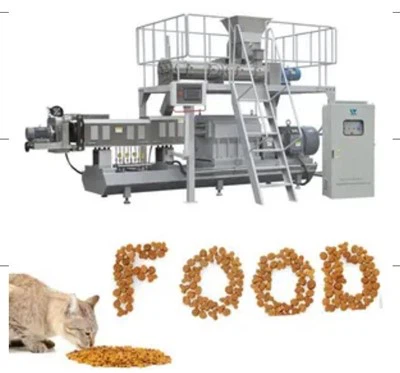
Product introduction
Guinea pigs are herbivorous pets with sensitive digestive systems and high requirements for dietary fiber, vitamin C (which they cannot synthesize on their own) and low sugar content. Our production line is customized to these physiological characteristics, enabling the production of nutritionally balanced, palatable and digestible guinea pig food in various forms such as pellets, strips and crispy grains.
The final cost of the production line is affected by multiple factors. We will provide personalized technical solutions based on each customer's specific needs, including production scale, output requirements, product type (e.g., high-fiber adult guinea pig food, calcium-rich food for young guinea pigs), process design and equipment selection.

Advantages of Guinea Pig Food Production Line
Nutrition-Oriented Customization for Guinea Pigs: The production line is exclusively designed based on guinea pigs' physiological traits-focusing on high dietary fiber, sufficient vitamin C retention, and low sugar/low fat formulation. It can precisely blend alfalfa, timothy grass, and other forage-based raw materials with targeted nutrients, ensuring the final product meets the growth, reproduction, and health maintenance needs of guinea pigs at all stages (young, adult, senior).
Advanced Nutrition Retention Technology: Equipped with a low-temperature extrusion and precision drying system. The controlled heating process in the extruder minimizes the loss of heat-sensitive nutrients like vitamin C, while the moderate drying process preserves the natural aroma and palatability of raw materials. The porous puffing structure also enhances nutrient absorption rate, adapting to guinea pigs' sensitive digestive systems.
Flexible Production & Diversified Formats: Supports customized production of various product forms (pellets, strips, crispy grains) and specifications (different particle sizes, nutrient ratios). Whether you need high-fiber food for adult guinea pigs, calcium-rich feed for young ones, or low-protein formula for seniors, the line can adjust processes and equipment parameters to meet diverse market demands.
Stable Operation & Cost-Effective Design: Adopts high-quality wear-resistant components and an intelligent control system, ensuring continuous 24-hour production with low failure rates. The energy-saving electric heating and drying equipment reduces power consumption, while the modular design allows for easy maintenance and future capacity expansion-lowering long-term operation and upgrade costs for customers
Strict Quality Control Throughout the Process: Integrates multi-stage quality inspection links, from raw material screening (impurity removal) to final product screening (size and moisture testing). The closed production process avoids cross-contamination, and the equipment complies with international pet food production hygiene standards, ensuring safe, reliable, and consistent product quality.
Production Process of Guinea Pig Food Production Line

Raw Material Preparation & Mixing: Select high-quality raw materials suitable for guinea pigs, such as alfalfa meal, timothy grass meal, corn, wheat bran, soybean meal, as well as vitamin C supplements and mineral additives. The raw materials are weighed and mixed in a precise ratio in a mixer to ensure uniform distribution of nutrients.
Crushing: The mixed raw materials are sent to a crusher to be ground into fine powder. This not only improves the digestibility of the food (adapting to guinea pigs' small digestive tracts) but also lays the foundation for subsequent extrusion and puffing.
Puffing: The crushed material is mixed with an appropriate amount of water and transported to an extruder. Under controlled heating and pressure (powered by electricity), the material undergoes sudden decompression after extrusion. The moisture inside the material evaporates rapidly, causing the material to expand and form a porous, crispy texture that guinea pigs love to chew. The puffing process also helps retain heat-sensitive nutrients like vitamin C.
Drying: The extruded semi-finished products are sent to an electric oven for drying, removing most of the moisture to reduce the water content to a safe range. This step effectively extends the shelf life of the food and prevents mold growth during storage.
Cooling & Screening: The dried particles are transferred to a cooler for rapid cooling to room temperature, which helps maintain the crispy texture of the product. After cooling, the particles pass through a vibrating screen to sieve out unqualified products (such as oversized or undersized particles), ensuring consistent product quality.
Packaging & Storage: The qualified guinea pig food is sent to an automatic packaging machine for weighing, sealing and labeling. The packaged products are stored in a dry, ventilated warehouse for subsequent sales.
Cooperative client


Products Description

Packaging and transportation


Hot Tags: guinea pig food production line, China guinea pig food production line manufacturers, suppliers, factory, Wet Pet Food Production Line, Pet Food Machine, Dog Food Production Line, Dog Food Making Equipment, Dry Pet Food Production Line, Pet Food Machinery